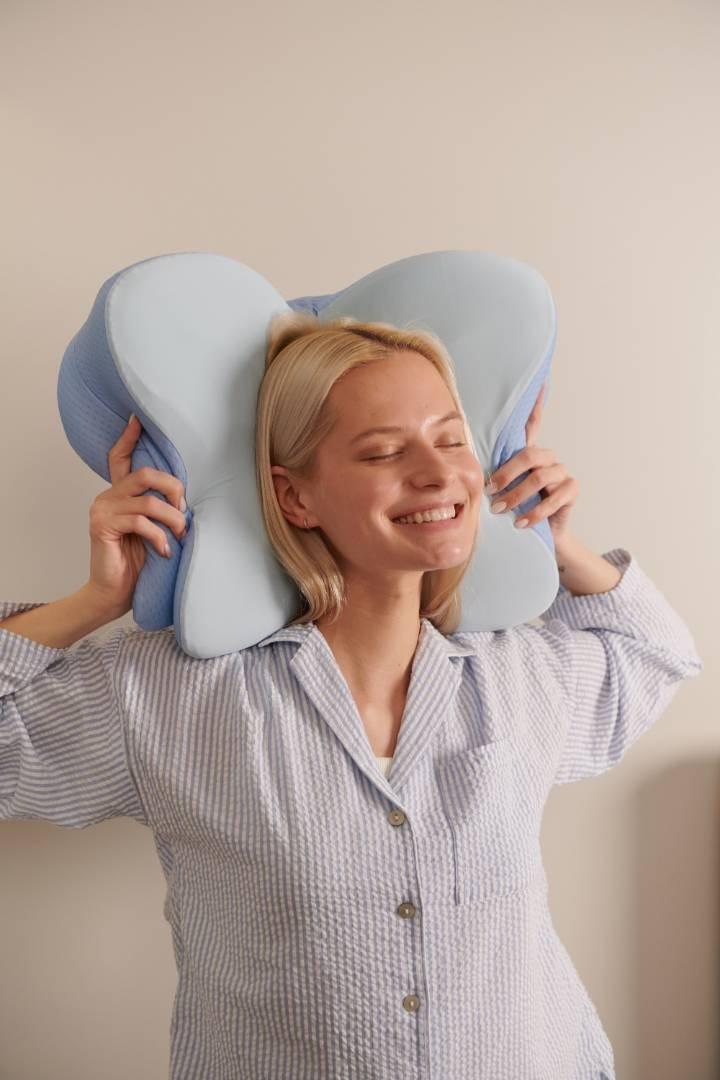


What Makes Ergonomic Pillows Different?
Ergonomic pillows are designed with shape and structure in mind — not just softness.
Common features include:
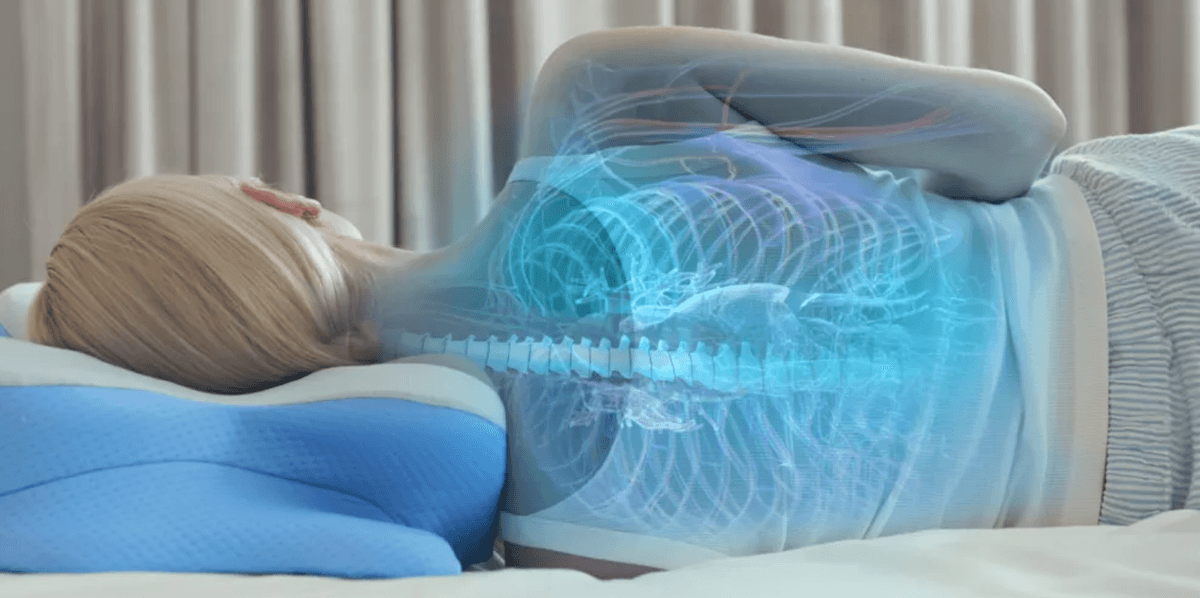
- Contoured design to support the neck’s natural curve
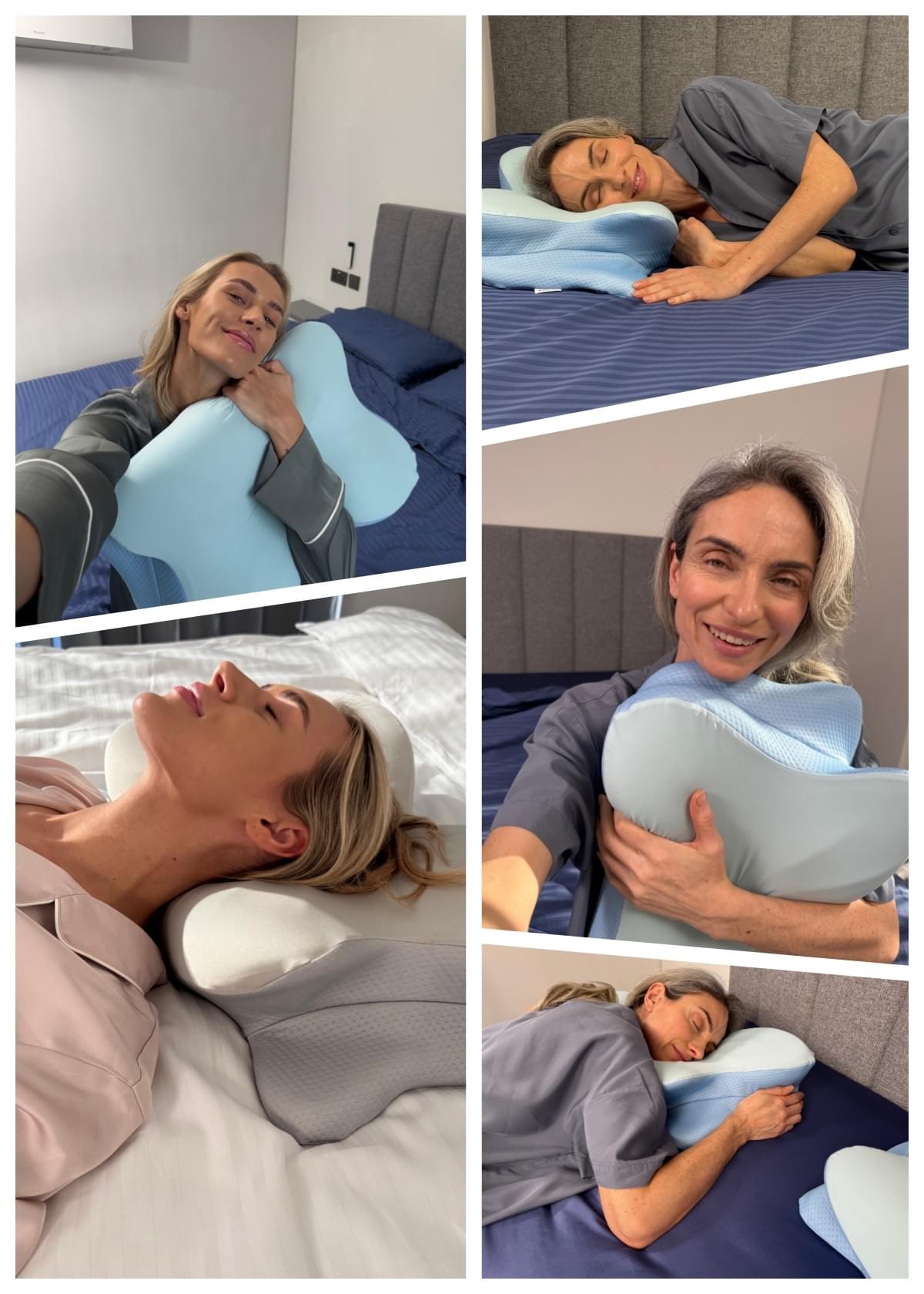
- Memory foam that adapts to different sleeping positions
- Stable support for side and back sleepers
Rather than forcing your neck into position, these pillows are designed to work with your body while you sleep.
This product is not intended to diagnose, treat, cure, or prevent any medical condition. Individual results may vary.
That’s why ergonomic sleep design focuses on alignment, not softness alone.
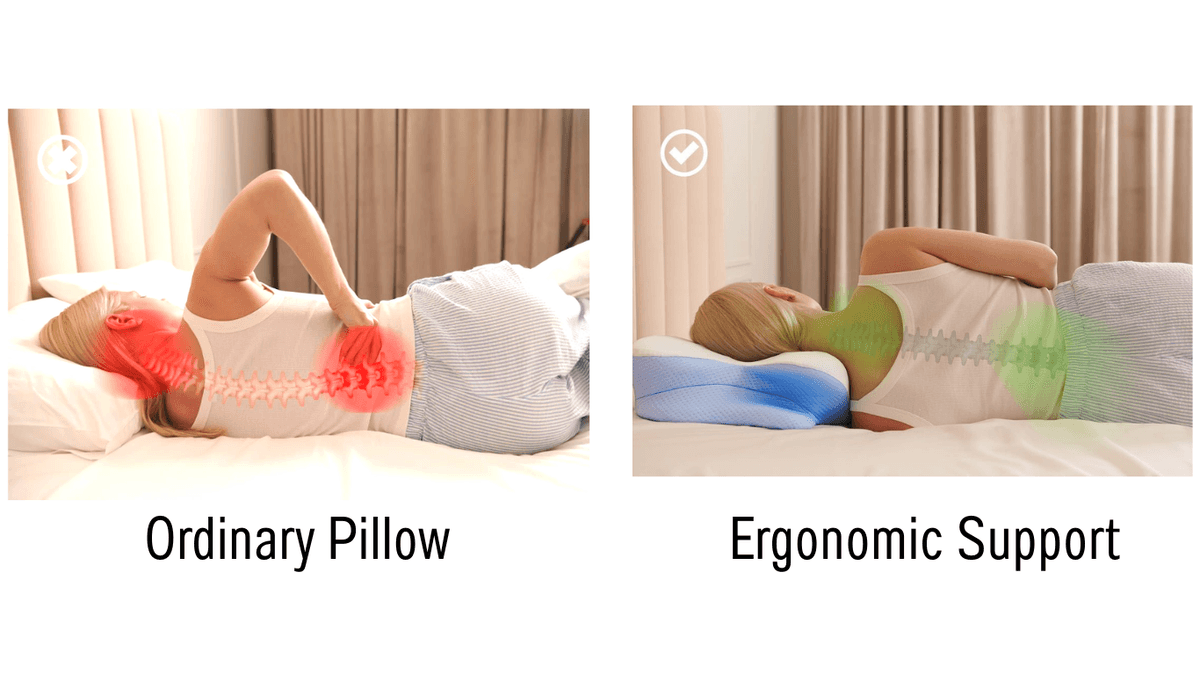
An ergonomically contoured pillow is shaped to help keep your head and neck in a more natural position — whether you sleep on your back or side.
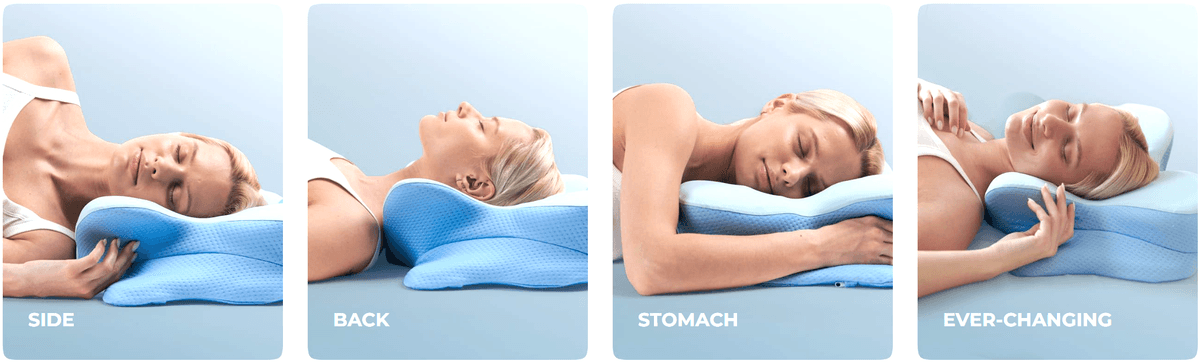
This ergonomic pillow design features:
- A curved neck support zone
- A central head cradle
- Side contours for shoulder comfort
Together, these zones are designed to reduce unnecessary pressure and allow muscles to relax during sleep.

This type of pillow may be suitable for people who:
- Wake up with neck or shoulder stiffness
- Toss and turn during the night
- Sleep on their back or side
- Want better sleep support without complicated devices

Many users report feeling more supported and relaxed after adjusting to an ergonomic pillow.
Results vary depending on sleep habits, posture, and personal comfort preferences.Consistency and proper positioning are key.
Why Neck Support Is So Important During Sleep?
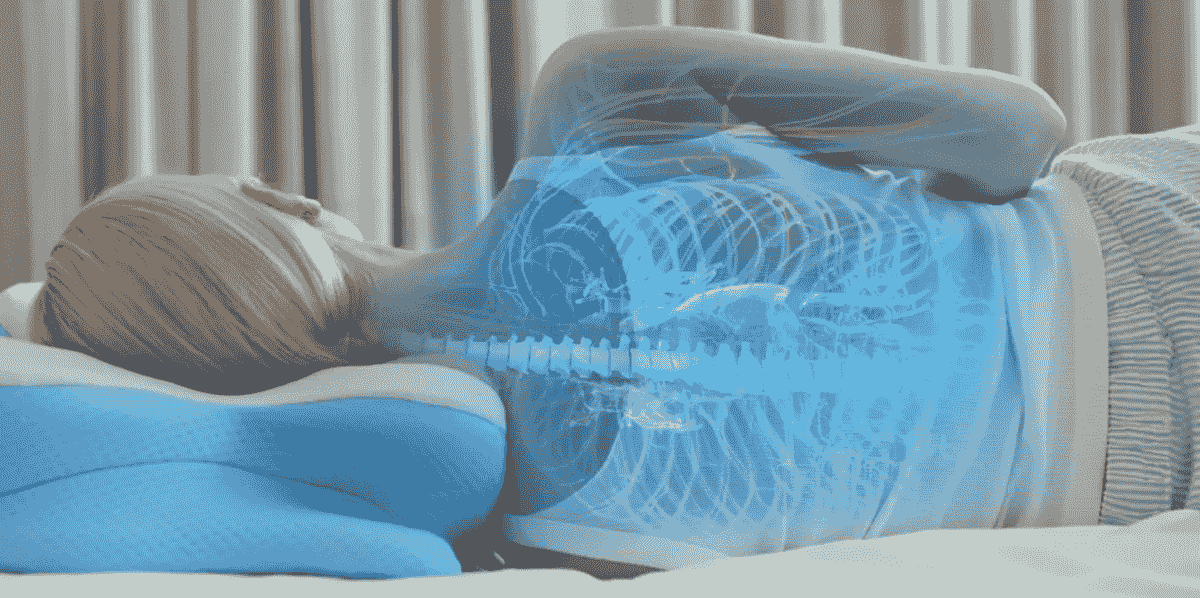
Your neck has a natural curve that needs gentle, consistent support while you sleep.
Traditional pillows
Flatten over time
Traditional pillows
Shift during the night
Traditional pillows
Fail to adapt to different sleeping positions
Over time, poor support during sleep can lead to:
Poor sleep posture can place constant pressure on the neck, shoulders, and upper spine.
Over time, this may lead to stiffness, tension, and restless nights — especially for back and side sleepers.
Traditional pillows are often too flat, too high, or lose shape quickly, forcing your muscles to compensate while you sleep.
Over time, poor support during sleep can lead to:
Poor sleep posture can place constant pressure on the neck, shoulders, and upper spine.
Over time, this may lead to stiffness, tension, and restless nights — especially for back and side sleepers.
Traditional pillows are often too flat, too high, or lose shape quickly, forcing your muscles to compensate while you sleep.